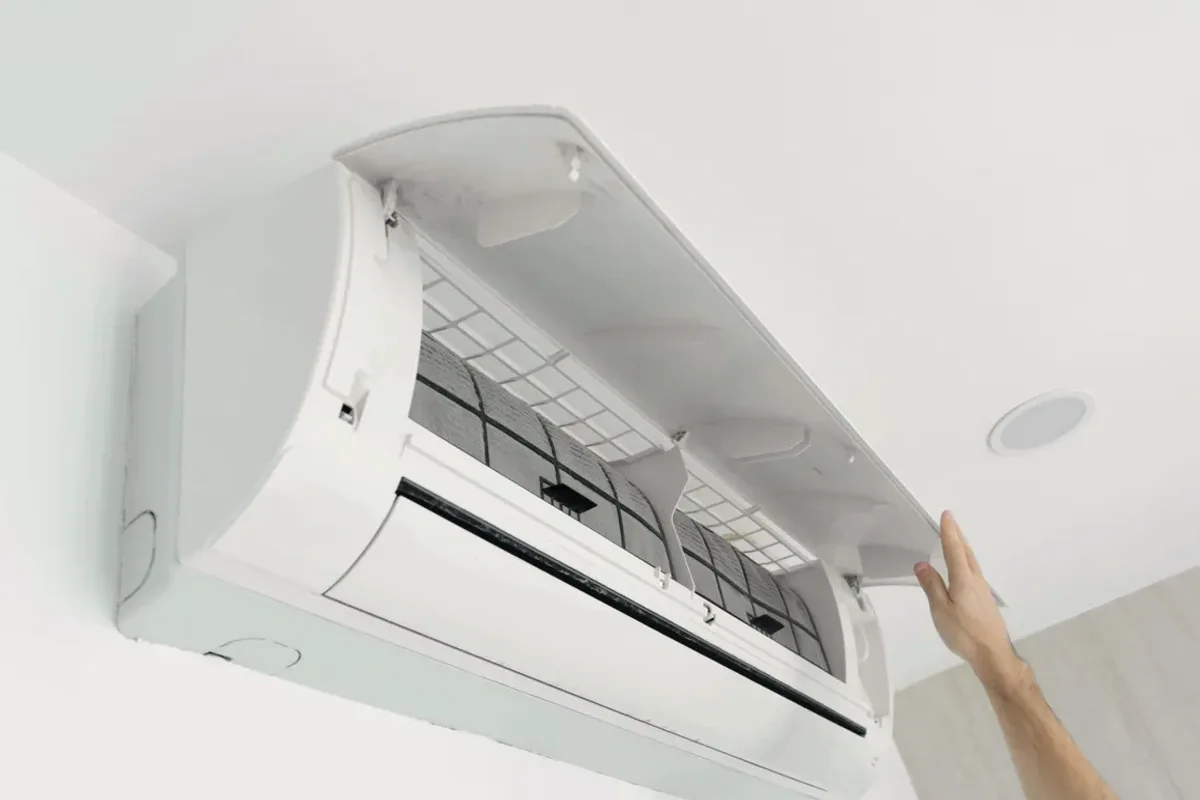
Request ductless ac installation for a property in Guelph. Include the equipment, the problem or planned work, and your location so the request can be reviewed.
What should be assessed before choosing locations for a ductless mini-split?
A ductless mini-split can provide cooling where extending ductwork is not part of the project, but suitable equipment and placement depend on the rooms and building. A site assessment considers room dimensions, the intended zones, electrical capacity, mounting locations, and a route for refrigerant lines and condensate drainage. These details affect installation scope and how the system can serve the spaces. If winter heating is also desired, the selected model's heating capability and the property's requirements should be reviewed.
The assessment should document the rooms to be served, their layout, mounting surfaces, electrical supply, and a practical route for lines and condensate. Room-by-room needs can affect the number and capacity of indoor units, rather than assuming one head serves every space. Existing ductwork and the intended use of the system also shape selection. If heating is desired, confirm that the proposed model and design suit that use.
Mini-split room assessment, zoning, and equipment selection
Indoor and outdoor placement, electrical capacity, line routing, and drainage
Commissioning and model-specific coil and condensate maintenance
Assessment and Scope
Questions for the Proposed Work
01
Plan zones and equipment from room conditions
The rooms to be cooled, their connections to one another, and the occupants' intended use help determine how many indoor units are appropriate. A single unit may not distribute air effectively through closed or separated spaces. Assessment should record room dimensions and likely heat loads, then compare equipment options and zoning. If the system is also expected to heat, review that requirement explicitly rather than treating cooling selection as proof of heating suitability.
02
Confirm mounting, electrical, and line routes
Indoor head placement affects air distribution, service access, and the route to the outdoor unit. The assessment should identify suitable mounting surfaces, an outdoor location, electrical requirements, and a path for refrigerant lines and condensate drainage. Where an existing opening is being reused, its size and location should be checked against the proposed installation. These observations establish whether additional electrical coordination, mounting work, or a different route is needed.
03
Commissioning and care depend on the installed model
After installation, commissioning checks whether the connected system operates according to its design and manufacturer instructions. Records of the selected model, connections, and settings give useful context for later service. If a ductless head develops a musty smell or drainage concern, coil condition and condensate flow can be assessed; that is a maintenance issue, not a reason to add unrelated equipment. Cleaning methods and intervals should follow inspection findings and manufacturer guidance.
Compare the next step
Ask whether the repeated issue affects one head, every connected head, or only a particular operating mode. Provide the earlier work and error history. Before replacing or adding equipment, request an explanation of any compatibility, drainage, control, or installation condition that would otherwise remain unresolved.