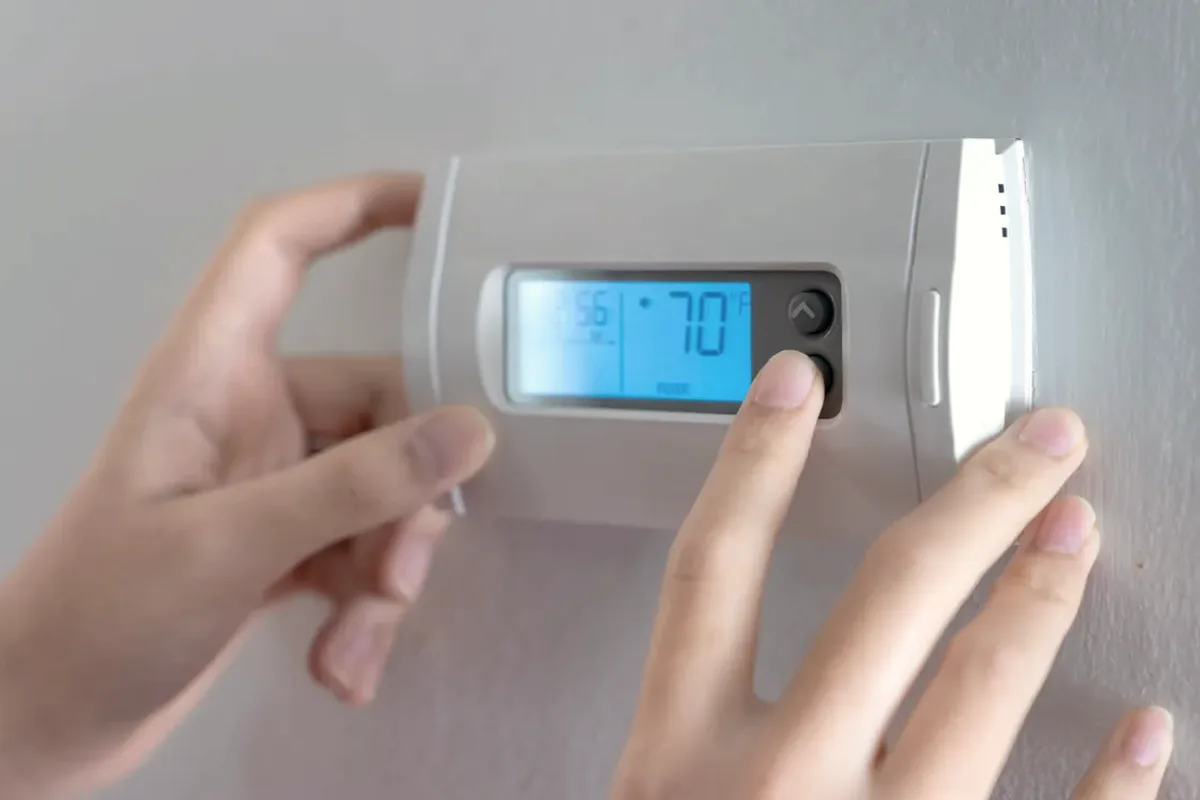
Request thermostat repair & replacement for a property in Guelph. Include the equipment, the problem or planned work, and your location so the request can be reviewed.
How can a homeowner determine whether a thermostat can be repaired or needs replacement?
A blank display, inaccurate reading, or short cycling can originate in the thermostat, its wiring, or the equipment it controls. Inspection should establish whether the control receives power, sends the intended call, and is compatible with the connected furnace, air conditioner, or heat pump. For replacement, the existing wiring and system functions matter, especially when considering a programmable or smart thermostat. These findings distinguish a repairable control fault from a replacement or compatibility issue and guide calibration after installation.
Document the thermostat model, displayed symptoms, wiring, and the equipment it controls. Testing can distinguish a power or connection issue from a failed relay, switch, or inaccurate sensor, while system behavior helps identify a possible equipment fault. For replacement, verify that the proposed control supports the heating and cooling functions and wiring present. Calibration and control settings should be checked after repair or installation.
Thermostat power, wiring, relays, switches, and temperature readings
Programmable and smart control selection and equipment compatibility
Calibration and distinction between thermostat and HVAC equipment faults
Assessment and Scope
Questions for the Proposed Work
01
Trace an unresponsive control before replacing it
A blank screen or failure to call for heat or cooling does not by itself prove the thermostat has failed. Inspection can check its power source, connections, and response, then compare the control signal with equipment operation. A relay or switch fault may call for a different repair from a wiring problem or an equipment fault. Internal electrical diagnosis should be left to a qualified person, and safety controls should never be bypassed.
02
Check compatibility before choosing a new thermostat
A programmable or smart thermostat must support the connected equipment and the functions it is expected to control. Existing wiring, the number of heating or cooling stages, and heat pump functions can affect compatibility. A replacement plan should record those details before selecting a model. Remote access or runtime reporting is useful only if the control and system support the intended features; these functions should not be assumed from the thermostat's appearance.
03
Calibrate and distinguish control faults from system faults
After repair or replacement, calibration and settings can be checked against the equipment response and the thermostat's installation instructions. An inaccurate displayed temperature may involve sensor placement as well as the control itself. If short cycling continues, the equipment and its controls may need further diagnosis rather than repeated thermostat adjustments. Service records and observations of when the system starts or stops help separate a thermostat issue from a furnace, air conditioner, or heat pump fault.
Compare the next step
Have the contractor compare the control call with the equipment response while considering the previous replacement history. Ask whether wiring, configuration, sensor placement, or the appliance itself explains the recurrence. Agree on the operating sequence that will be demonstrated before another thermostat replacement is accepted as the solution.
Thermostat wiring is not universal. Do not connect wires by colour alone or work on energized wiring; a compatible control must be configured for the equipment it serves.